
Autumn brings crisp air, vibrant foliage, and pumpkin-spiced everything—but for homeowners, it also brings a ticking clock. As the temperatures drop, small exterior issues and deferred maintenance can quickly turn into expensive winter emergencies.
Tackling your home's seasonal punch list now prevents frozen pipes, drafty living rooms, and skyrocketing heating bills. Here is your definitive room-by-room, exterior-to-interior guide to getting your home buttoned up and winter-ready.
1. Exterior & Roof: Fortify Your First Line of Defense
Your roof, gutters, and siding bear the brunt of winter precipitation. Catching vulnerable spots now saves thousands in structural repairs.
Clear the Gutters and Downspouts: Once the bulk of the leaves have fallen, clean out gutters completely. Clogged gutters prevent rain and melting snow from draining away from the roofline, leading to ice dams, damaged fascia, and basement leaks. Ensure downspouts direct water at least 5 feet away from your foundation.
Inspect the Roof: Scan for missing, curled, or damaged shingles, especially around chimneys and plumbing vents. If climbing a ladder isn't for you, use a pair of binoculars from the yard or hire a roofing technician for a quick inspection.
Trim Overhanging Branches: Autumn winds and heavy winter snow put stress on tree limbs. Cut back dead or precariously dangling branches within 10 feet of your roof or power lines.
Seal Gaps and Cracks: Walk the perimeter of your house. Caulk gaps around window frames, door trim, and where utility lines enter the siding. This keeps both cold air and unwelcome rodents looking for warmth outside.
2. Outdoor Living & Yard Care
Prepping your yard and patio equipment now protects your investments and ensures a healthy lawn come spring.
Shut Down Exterior Plumbing: Disconnect, drain, and roll up garden hoses before the first hard freeze. Turn off the interior shut-off valves for outdoor spigots, then open the outdoor taps to drain any lingering water. If you have an in-ground irrigation system, schedule an air blowout to avoid cracked pipes underground.
Clean and Stow Outdoor Furniture: Wash patio cushions and furniture, let them dry completely, and stow them in a shed, garage, or under heavy-duty weather covers.
Winterize Power Equipment: Run lawn mowers and string trimmers down to empty, or add fuel stabilizer to prevent ethanol degradation in the fuel lines. Swap spark plugs, sharpen blades, and prep snow blowers so they start on the first pull during the first snowfall.
Feed the Lawn: Fall is the best time to aerate and apply a slow-release, high-potassium winter fertilizer. This promotes strong root growth during dormancy and yields a lush green yard when spring rolls around.
3. Heating & Air Quality: Stay Warm and Safe
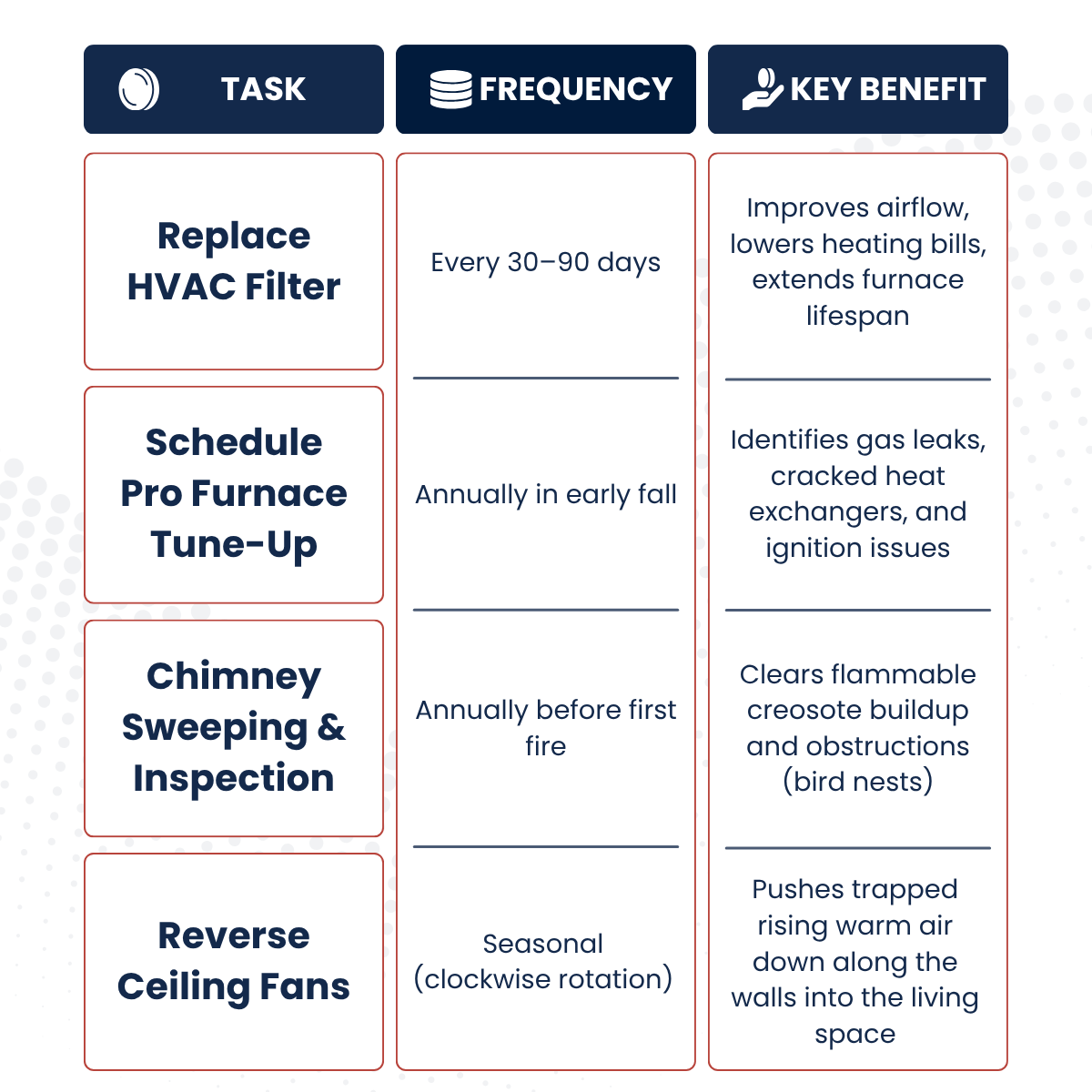
A well-maintained HVAC system works more efficiently, lowers your monthly heating bills, and keeps your indoor air clean during the months windows remain closed.
4. Doors, Windows & Insulation: Stop the Drafts
Heating energy escapes through poorly sealed openings. Simple air sealing pays for itself quickly.
Inspect Weatherstripping: Check door sweeps and window seals. If you see daylight through the edges of a closed exterior door, replace the stripping.
Install Storm Windows & Doors: If you have interchangeable screens and storm panels, make the swap before temperatures drop below freezing.
Insulate Exposed Pipes: Pipes running through unheated spaces—like crawlspaces, uninsulated basements, or attics—should be wrapped in foam insulation sleeves to prevent freezing during severe cold snaps.
5. Home Safety Check
With furnaces firing up, fireplaces burning, and holiday lights going up, autumn is the right moment for a home safety reset.
Test Detectors and Change Batteries: Smoke and carbon monoxide detectors are your family's primary line of defense. Test each unit, swap out alkaline batteries, and check the expiration date on the unit itself (most detectors have a 7- to 10-year lifespan).
Inspect Fire Extinguishers: Ensure you have an operable extinguisher on every floor, particularly near the kitchen and furnace room. Check that the pressure gauge is in the green zone.
Clean the Dryer Vent: Lint buildup is a major fire hazard, and dry air increases static electricity. Pull the dryer away from the wall and brush or vacuum out the entire duct run leading outside.
Tackle It One Weekend at a Time
A comprehensive fall checklist can feel overwhelming if attempted all at once. Divide tasks into manageable blocks: dedicate one weekend to the exterior and gutters, one to lawn and plumbing, and one to indoor mechanicals and safety checks. Taking care of these preventative steps now guarantees you can curl up inside all winter long without worrying about what’s happening outside your walls.